In 2026, daytime running lamps have become one of the highest-duty lighting functions on the vehicle — and one of the highest-risk SKUs in the automotive aftermarket. Unlike headlamps, which are used primarily at night or in low-visibility conditions, DRLs activate automatically when the engine starts and remain on throughout every daytime journey. A vehicle driven 12,000 miles per year in typical urban conditions may accumulate 1,500 to 2,000 hours of DRL operating time annually — three to five times the headlamp operating hours for the same vehicle. Every one of those hours exposes the DRL assembly to UV radiation, thermal cycling, road vibration, and weather ingress that progressively degrade the optics, the sealing, and the electronics.
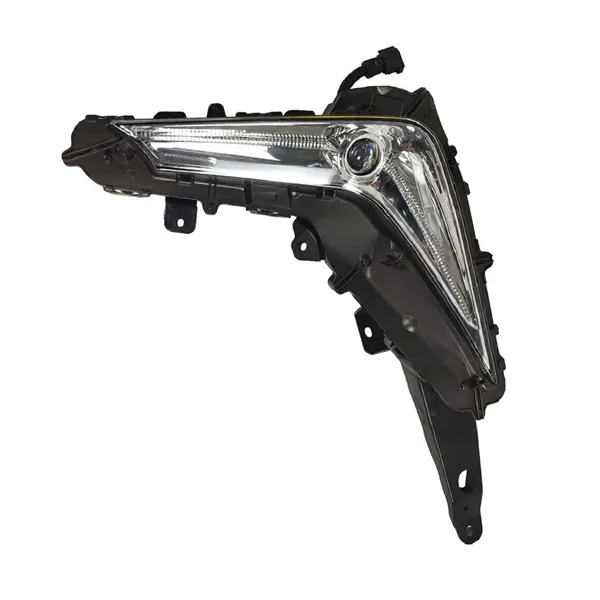
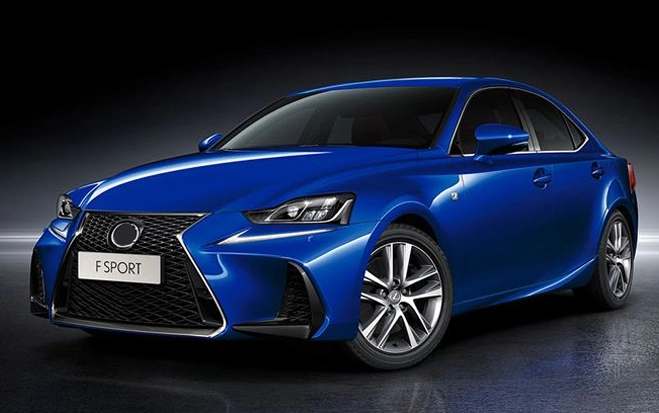
For distributors sourcing daytime running lamps in 2026, the failure mode that generates the most expensive returns is not the immediate installation failure — it is the "looks fine at install, fails at month eight" failure that arrives as a yellowed lens, a condensation complaint, or an intermittent flicker that the customer cannot reproduce at the dealer. These late-stage failures generate returns, negative marketplace ratings, and warranty replacement costs that erode the margin on the original sale and on every subsequent sale of the same SKU. Lexus IS300 daytime running lights for the 2018 to 2020 IS250, IS350, IS200t, and IS300 variants illustrate the challenge precisely: a model-specific DRL with a defined fitment window, a choice between stream-of-light and non-stream-of-light configurations, and a customer base that expects OEM-level durability from an aftermarket product. Lexns' DRL rangeaddresses this through vehicle-specific fitment data, IP-rated sealing, UV-resistant optics, and thermal management — the four design dimensions that determine whether a DRL survives its operating environment or generates a return.
Why Cheap Daytime Running Lamps Fail First: Duty Cycle, UV, Heat, and Vibration
The failure mechanisms that shorten DRL life are not random — they are predictable consequences of the operating environment that every DRL faces, and they accelerate in proportion to the quality gap between the product's design and the demands of that environment.
The High Duty Cycle Reality
A DRL that activates every time the engine starts accumulates operating hours at a rate that most buyers do not anticipate when they evaluate the product at the point of purchase. In a typical urban driving pattern — multiple short trips per day, engine starts in the morning and evening — the DRL may be on for 4 to 6 hours per day. Over a 12-month period, this produces 1,500 to 2,000 operating hours. Over a 3-year warranty period, it produces 4,500 to 6,000 hours — a duty cycle that exposes every component in the DRL assembly to cumulative stress that cheap materials cannot sustain.
UV Exposure and Lens Yellowing
The polycarbonate lens that covers the DRL's LED array is the component most visibly affected by UV exposure. Polycarbonate is an excellent optical material — it is lightweight, impact-resistant, and can be molded into complex shapes — but it is inherently susceptible to UV degradation. UV radiation breaks down the polymer chains in the polycarbonate surface, producing a yellowing and hazing effect that reduces light transmission and changes the color appearance of the DRL output. Research from AAA indicates that plastic headlamp lenses can begin showing visible yellowing around five years of service, with the deterioration driven primarily by UV exposure — and DRL lenses, which face the same UV environment but accumulate more operating hours, can reach visible degradation faster than headlamp lenses on the same vehicle.
The business consequence for distributors is a return that arrives at 12 to 24 months with a complaint of "yellowed" or "hazy" — a failure that is clearly visible, clearly attributable to the product, and clearly within the warranty period. A DRL with a UV-stabilized lens material and a UV hardcoat delays this failure significantly; a DRL with an unprotected polycarbonate lens accelerates it.
Vibration and Thermal Cycling
Road vibration subjects the DRL's PCB, solder joints, connector terminals, and mounting tabs to cyclic mechanical stress at frequencies that depend on the road surface and the vehicle's suspension characteristics. Over thousands of operating hours, this cyclic stress can initiate micro-cracks in solder joints, cause connector terminal fretting that increases contact resistance, and fatigue the mounting tabs that secure the DRL assembly to the bumper. The result is intermittent electrical faults — flickering, partial illumination, or complete failure — that are difficult to diagnose because they may not be reproducible at the dealer.
Thermal cycling — the repeated heating and cooling of the DRL assembly as the engine starts and stops — adds a second mechanical stress mechanism. The different thermal expansion coefficients of the plastic housing, the metal PCB, and the solder joints create differential expansion and contraction stresses at every temperature cycle. In a DRL that accumulates 2,000 engine start-stop cycles per year, these thermal stresses accumulate faster than the design life of cheap solder joints and connector terminals.
How Daytime Running Lamps Age and What Good Design Does Differently
Understanding the aging mechanisms of a DRL assembly clarifies why the design choices that separate a durable product from a cheap one are not cosmetic — they are engineering decisions that directly determine the failure rate at 12, 24, and 36 months.
The Four Aging Mechanisms and Their Design Countermeasures
Optical degradation from UV exposure is countered by UV-stabilized lens resin and a UV hardcoat applied to the lens surface. The UV hardcoat is a thin, hard coating that absorbs UV radiation before it reaches the polycarbonate substrate, slowing the polymer chain degradation that produces yellowing. The effectiveness of the hardcoat depends on its UV absorption capacity and its adhesion to the lens surface — a hardcoat that delaminates under thermal cycling provides no UV protection after delamination.
Moisture ingress from rain, snow, pressure washing, and thermal cycling is countered by a sealed housing design with a gasket or adhesive seal at every interface between the lens, the housing, and the mounting surface. The sealing system must maintain its integrity through the thermal cycling that causes the housing to expand and contract, the vibration that fatigues adhesive bonds, and the pressure washing that forces water into any gap that the seal does not fully close. An IP67 or IP68 rating — verified by a standardized immersion test — provides the evidence that the sealing system has been tested to a defined standard rather than assumed to be adequate.
Thermal degradation of the LED junction and driver electronics is countered by a heat-spreading design that conducts heat from the LED junction through the PCB and housing to the ambient air. In a DRL assembly, the available heat sink volume is constrained by the housing geometry, which means the thermal design must be efficient — a metal-core PCB that spreads heat laterally across the board surface, a thermal interface material that fills the microscopic air gaps between the PCB and the housing, and a housing geometry that maximizes the surface area available for convective cooling.
Vibration-induced mechanical failures are countered by reinforced mounting points that distribute the vibration load across a larger area of the housing, PCB support structures that reduce the amplitude of board flexure under vibration, and strain relief at the connector interface that prevents the connector from transmitting vibration loads directly to the solder joints on the PCB.
DRL Assembly Durability Structure: The Four Design Layers That Determine Service Life
| Design Layer | Cheap DRL Approach | Durable DRL Approach | Failure Mode Prevented |
|---|
| Lens optics | Uncoated polycarbonate | UV-stabilized resin with UV hardcoat | Yellowing and hazing from UV exposure |
| Sealing system | Minimal gasket or no seal | IP67/IP68-rated gasket and housing seal | Condensation, corrosion, intermittent faults from moisture ingress |
| Thermal path | FR4 PCB, no heat spreader | Metal-core PCB with thermal interface material | LED lumen depreciation and driver failure from overheating |
| Vibration design | Standard mounting tabs, unsupported PCB | Reinforced mounting, PCB support, strain relief | Solder joint cracking, connector fretting, intermittent faults from vibration |
Key Specifications for Waterproof DRL Lamps: The Distributor RFQ Checklist
Specifying durable daytime running lamps requires locking four categories of durability specification before the order is placed — because each category addresses a distinct failure mechanism that will generate returns if it is not controlled.
Waterproofing and Sealing: Why IP67 and IP68 Matter
The IP rating system provides a standardized basis for comparing the sealing performance of DRL assemblies. IP67 indicates dust-tight protection and temporary immersion protection — the assembly can withstand immersion in water up to 1 meter deep for 30 minutes without water ingress. IP68 indicates dust-tight protection and continuous immersion protection — the specific depth and duration are defined by the manufacturer, but IP68 represents a higher sealing standard than IP67.
For DRLs that will be used in rain, snow, and pressure-wash environments, IP67 is the minimum acceptable sealing standard. IP68 provides additional margin for vehicles that are regularly pressure-washed or driven through standing water. Request the IP rating test report — not just the IP rating claim — from the supplier, and confirm that the test was conducted on the production assembly rather than on a prototype.
UV Resistance: Anti-Yellowing Specification
Request the UV aging test conditions and acceptance criteria from the supplier. A meaningful UV aging test exposes the lens assembly to a defined UV dose — expressed in hours of UV lamp exposure at a defined irradiance level — and measures the haze percentage, yellow index, and light transmittance before and after exposure. Acceptance criteria that specify a maximum haze increase and a minimum transmittance retention after the UV aging test provide a quantitative basis for comparing UV resistance between products.
Thermal Management: Continuous Operation Specification
Request the steady-state temperature rise test data — the measured case or junction temperature at rated power in a defined ambient temperature condition. For DRLs that will be used in hot climate markets, request the temperature rise data at an elevated ambient temperature — 40°C or higher — to confirm that the thermal design maintains acceptable junction temperatures in the worst-case operating condition. Request the thermal protection strategy — whether the driver includes a thermal derating or cutback circuit that reduces power when the junction temperature approaches the maximum rated value.
Vibration Durability: Mechanical Reliability Specification
Request the vibration test plan and results from the supplier. A vibration test that is aligned with recognized automotive or electronics vibration test standards — specifying the frequency range, acceleration level, and test duration — provides a quantitative basis for evaluating the DRL's resistance to road vibration. Confirm that the test was conducted on the production assembly with the connector and mounting hardware installed, not on the PCB alone.
Vehicle-Specific Fitment: Reducing Returns for Lexus IS300 Daytime Running Lights
Fitment mismatch is a hidden failure mode for DRL distributors — it generates returns that are indistinguishable from quality failures in the return data, but are caused entirely by incorrect product selection rather than by product defects.
The Fitment Risk for the 2018 to 2020 Lexus IS Platform
The 2018 to 2020 Lexus IS platform covers four model variants — IS250, IS350, IS200t, and IS300 — with a DRL design that includes two configuration options: with stream of light and without stream of light. The stream-of-light configuration uses a sequential LED animation effect for the DRL function; the non-stream configuration uses a static LED illumination pattern. These two configurations are not interchangeable — the LED array layout, the driver circuit, and the lens optics are different between the two configurations, and a customer who orders the wrong configuration will receive a product that does not match the appearance of the original DRL on their vehicle.
In addition to the configuration choice, the DRL is a left-hand and right-hand pair — the two units are mirror images of each other, and ordering the wrong side generates an immediate return. The connector keying and mounting tab geometry must also match the specific year range — a DRL specified for a 2018 IS300 may not fit a 2017 IS300 if the bumper design changed at the 2018 model year refresh.
Lexns' Vehicle-Specific Approach for the IS Platform
Lexns' 2018 to 2020 Lexus IS DRL product covers IS250, IS350, IS200t, and IS300 variants with explicit year-range specification and both stream-of-light and non-stream-of-light configuration options. This vehicle-specific catalog structure — exact year range, model variant coverage, and configuration choice — provides the fitment data granularity that prevents the wrong-configuration and wrong-year returns that generic DRL listings generate.
For distributors building a Lexus IS DRL SKU, the recommended approach is to create a fitment reference table that maps each order to the specific year, model variant, configuration, and side — and to include this fitment data on the carton label as a scannable barcode that the warehouse picker can verify at the point of packing. A QR code on the carton that links to the product page and fitment checklist provides an additional verification step for installers who want to confirm the fitment before opening the package.
Selection Workflow, Maintenance, and TCO: Turning DRLs Into a Low-Return SKU
Text-Based Selection Workflow
Step one: confirm the vehicle year range and exact IS model variant — IS250, IS350, IS200t, or IS300 — and the DRL configuration preference — stream of light or without stream of light. These two parameters define the correct SKU before any other specification is considered.
Step two: verify the physical interfaces. Confirm the left-hand or right-hand designation for the order. Photograph the existing DRL mounting points, the connector, and the bumper mounting tabs if the customer is replacing an existing unit. Compare the photographs against the supplier's dimensional drawings or sample photographs to confirm that the mounting geometry matches.
Step three: lock the durability targets. Define the minimum IP rating — IP67 for standard weather exposure, IP68 for high-pressure-wash or standing-water environments. Define the UV aging requirement — the minimum transmittance retention after the UV aging test. Define the vibration test standard and acceptance criteria. Define the thermal protection requirement — whether a thermal cutback circuit is required for hot climate markets.
Step four: run a pilot batch and track failure codes. For new SKUs, place a small pilot order and track returns by failure code — water ingress, yellowing or haze, flicker or intermittent, fitment mismatch, or broken mounting tabs. Use the failure code data to identify any specification gaps before scaling the order volume.
Step five: scale the order with improved labeling. Confirm that the carton label includes the vehicle year range, model variant, configuration (stream or non-stream), side (LH or RH), and a scannable barcode tied to the SKU in the warehouse management system. This labeling standard reduces warehouse pick errors to near zero and provides the fitment verification step that prevents wrong-configuration returns.
TCO Framework for DRL Distributors
| Cost Item | Cheap DRL Without Durability Specs | Durable DRL With IP Rating, UV Resistance, and Thermal Management |
|---|
| UV yellowing return rate at 12–24 months | Higher — uncoated lens degrades under UV exposure | Lower — UV hardcoat delays yellowing beyond warranty period |
| Water ingress return rate | Higher — inadequate sealing allows moisture ingress | Lower — IP67/IP68 sealing prevents moisture ingress |
| Vibration-related flicker return rate | Higher — unsupported PCB and connector fretting | Lower — reinforced mounting and strain relief reduce vibration failures |
| Thermal dimming return rate | Higher — no heat spreader or thermal protection | Lower — metal-core PCB and thermal cutback maintain lumen output |
| Fitment mismatch return rate | Higher — generic catalog without year-range specificity | Lower — vehicle-specific catalog with exact year range and configuration |
| Marketplace rating impact | Higher — multiple failure modes generate negative reviews | Lower — consistent durability generates positive reviews |
Conclusion
Cheap daytime running lamps fail because the operating environment they face — continuous UV exposure, road vibration, thermal cycling, and weather ingress — is more demanding than the materials and design choices that cheap products use can sustain. In 2026, with DRL duty cycles higher than ever and marketplace return rate penalties more severe than ever, the lowest-risk sourcing approach is vehicle-specific fitment combined with verified durability specifications: IP67 or IP68 sealing, UV-resistant optics with hardcoat protection, metal-core thermal management, and vibration-resistant construction.
For the Lexus IS300 daytime running lights segment — covering 2018 to 2020 IS250, IS350, IS200t, and IS300 variants with stream-of-light and non-stream-of-light configurations — Lexns provides the vehicle-specific fitment data and durability design that converts a high-return-risk SKU into a low-return, high-margin product line.
Get Your Recommended Configuration and Quote
Visit the DRL daytime running lamps product page to review the full range, then submit the following details to receive a matched product recommendation and quotation:
| Parameter | What to Provide |
|---|
| Work condition | Climate (high UV, hot, or cold), rain and snow exposure, car-wash frequency, road vibration severity |
| Quantity | Trial order quantity, monthly forecast, and target markets |
| Size and spec | Vehicle model, year range, and trim (IS250, IS350, IS200t, or IS300); DRL style (stream or non-stream); LH or RH; connector and bracket photographs |
| Target metrics | IP rating target (IP67 or IP68), UV aging requirement, warranty period target, flicker-free requirement |
| Current problem | Yellowing or haze, condensation or water ingress, flicker or intermittent fault, broken mounting tabs, high return rate from wrong fitment or configuration |
FAQ
1. What are daytime running lamps?
Daytime running lamps are forward-facing vehicle lights designed to improve the vehicle's visibility to other road users during daytime driving conditions. They are typically configured to activate automatically when the engine starts, without requiring the driver to switch them on manually, which means they accumulate significantly more operating hours than headlamps on the same vehicle. In most markets, DRLs are a regulatory requirement for new vehicles, and they are one of the most frequently replaced exterior lighting components in the aftermarket because their continuous operation exposes them to UV radiation, thermal cycling, road vibration, and weather ingress at a rate that exceeds most other lighting functions on the vehicle.
2. How do waterproof DRL lamps compare to standard DRLs and universal LED strips?
Vehicle-specific DRL assemblies — such as Lexns' 2018 to 2020 Lexus IS DRL — are designed to match the mounting geometry, connector type, and optical configuration of the original equipment DRL for a specific vehicle application. They install without bracket modification or wiring adaptation, and they are designed to meet the sealing, UV resistance, and thermal requirements of the specific housing geometry. Standard DRL assemblies without IP ratings or UV hardcoat protection may install correctly but fail earlier under UV and weather exposure. Universal LED strips provide flexibility for custom installations but require manual mounting and wiring adaptation, which increases installation variability and the risk of inadequate sealing at the mounting interface. For distributors supplying customers who drive in rain, snow, or high-UV environments, IP67 or IP68-rated vehicle-specific DRL assemblies provide the lowest return rate and the most predictable durability performance.
3. Does upgrading DRL durability actually pay off for distributors?
Yes, in most cases where the current return rate includes UV yellowing, water ingress, or vibration-related failures. The cost of a single DRL return — return shipping, inspection, restocking labor, and the marketplace fee that is not refunded — is typically three to five times the gross margin on the original sale. A DRL with a UV hardcoat that delays yellowing beyond the warranty period, IP67 sealing that prevents moisture ingress, and a metal-core PCB that maintains lumen output eliminates the return events that generate these costs. The unit price premium for a durable DRL over a cheap DRL is typically 20 to 40% — but the reduction in return rate from 10% to 1% or 2% produces a net margin improvement that exceeds the unit price premium within the first year of sales.
4. Do customers need to modify their vehicle to install Lexus IS300 daytime running lights?
Direct-fit DRL replacements for the 2018 to 2020 Lexus IS platform are designed to install without cutting, splicing, or bracket modification — the mounting tabs align with the bumper's existing mounting points, and the connector plugs directly into the vehicle's wiring harness. The main risk is ordering the wrong variant: the wrong year range, the wrong IS model variant, the wrong DRL configuration (stream versus non-stream), or the wrong side (LH versus RH). Confirming all four of these parameters before placing the order — and verifying the connector and mounting tab geometry against photographs of the vehicle's existing DRL location — eliminates the fitment mismatch returns that are the most common cause of wrong-fit complaints for this application.
5. What parameters should I provide for correct DRL selection and quoting?
Provide the vehicle year range and exact IS model variant — IS250, IS350, IS200t, or IS300 — and the DRL configuration preference — stream of light or without stream of light. Provide the side designation — left-hand or right-hand — and photographs of the existing DRL mounting points, connector, and bumper mounting tabs if available. Provide the durability targets — IP rating (IP67 or IP68), UV aging requirement, vibration test standard, and thermal protection requirement. Provide the target market and climate — high UV, hot, cold, or high rain and snow exposure — as these parameters affect the priority ranking of the durability specifications. And provide the current failure mode if the specification is replacing an existing product — whether that is yellowing or haze, condensation or water ingress, flicker or intermittent fault, or broken mounting tabs — because the failure mode identifies the specific durability gap that the new product must address.
 English