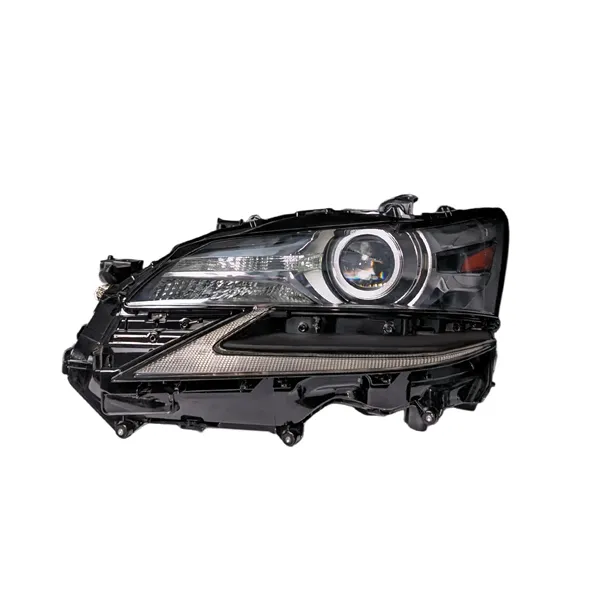
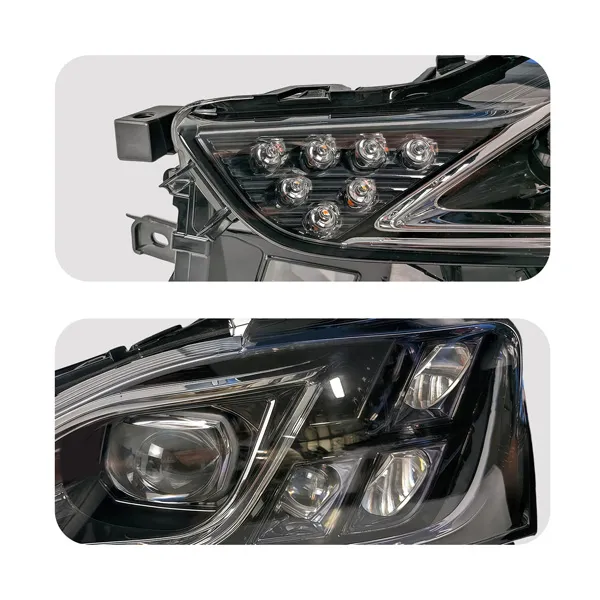
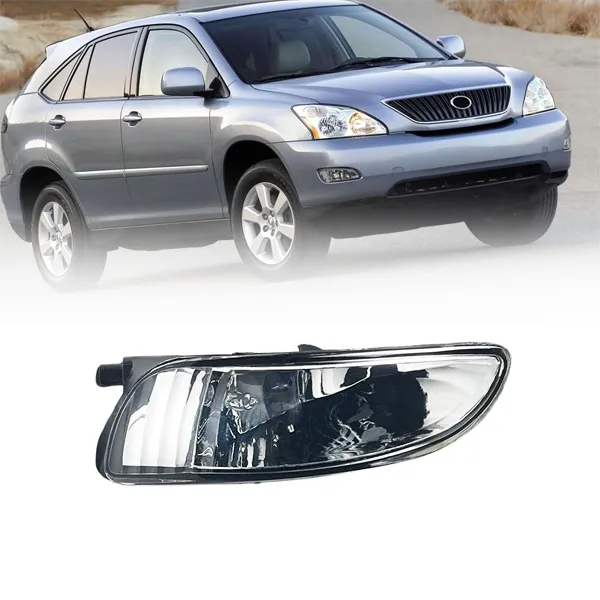
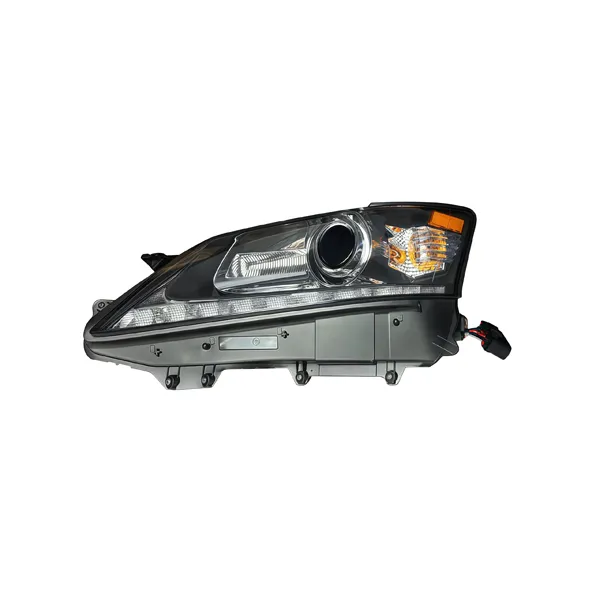
In 2026, the single most avoidable cost in the automotive aftermarket is not advertising spend or warehouse overhead — it is the return triggered by wrong fitment. A fog light that looks correct in the product photograph but has a different bracket tab spacing, a mismatched connector keying, or a left-hand orientation where the order specified right-hand generates a return, a reshipment, a restocking labor event, and — in marketplace channels — a negative rating that suppresses future sales of the entire SKU. For distributors sourcing fog lights at volume, the difference between a profitable product line and a margin-destroying one is often not the unit price but the return rate, and the return rate is almost entirely determined by how precisely the product data matches the OEM specification for the specific vehicle application.
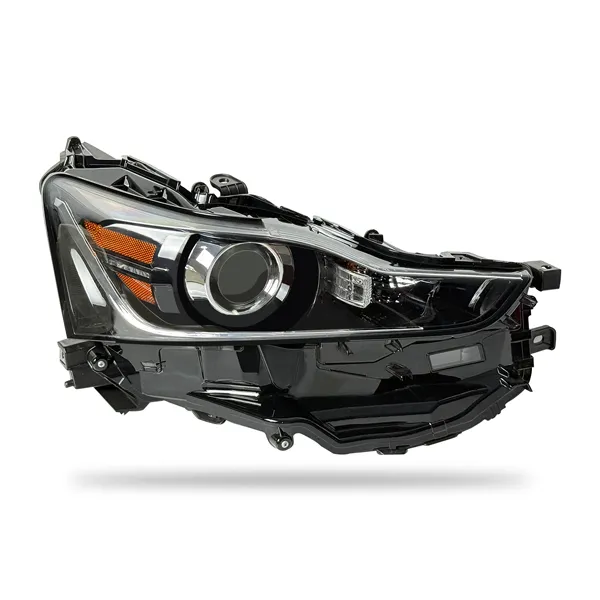
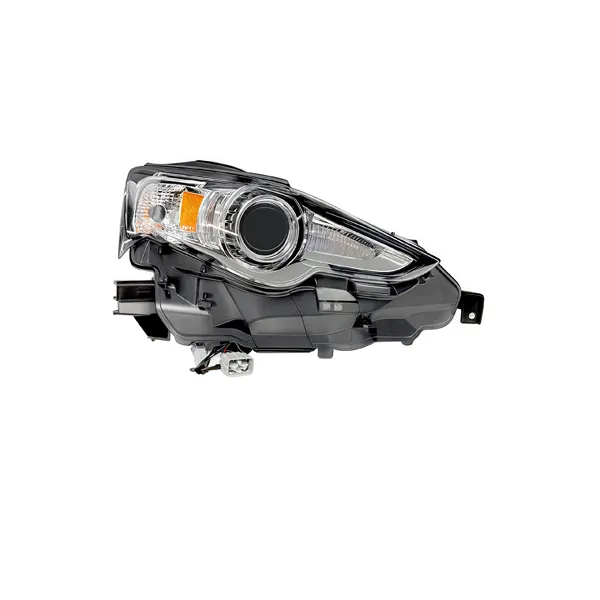
Lexus fog lights illustrate this challenge clearly. The Lexus lineup spans multiple model families — RX, LS, LX, ES, IS, GX, GS — each with multiple model years, facelift variants, and market-specific configurations that produce different mounting geometries, connector types, and beam pattern requirements. A distributor who sources Lexus fog lights without locking the application data to the OEM specification at the SKU level will generate wrong-fit returns from customers who ordered the correct model name but received the wrong variant. Lexns' fog lamp catalogaddresses this by mapping each product to specific vehicle model years and trim configurations — the 1:1 OEM-spec approach that converts fog lights from a high-return liability into a low-return, high-margin product line.
OEM Replacement Fog Lights: Why "Looks Similar" Creates High Return Rates
The most common misconception in fog light distribution is that visual similarity is a reliable proxy for fitment compatibility. It is not — and the gap between visual similarity and actual fitment compatibility is the source of the majority of wrong-fit returns in the automotive lighting aftermarket.
The Four Mismatch Mechanisms That Generate Returns
Left versus right confusion is the most frequent single cause of fog light returns. Fog light housings are mirror-image pairs — the left-hand unit and the right-hand unit have different internal geometries, different bracket orientations, and different beam cutoff angles. A product listing that does not clearly distinguish left from right, or a warehouse pick process that does not enforce left-right verification at the point of packing, will generate wrong-side returns at a rate that is directly proportional to the order volume.
Bumper facelift differences by model year are the second most common mismatch source. Automotive manufacturers update bumper designs at mid-cycle refreshes — sometimes as frequently as every two to three years — and the fog light mounting geometry changes with the bumper. A fog light specified for a 2003 to 2005 Lexus RX330 may not fit a 2006 to 2008 RX330 even though both are the same model name, because the bumper facelift changed the mounting tab spacing or the bezel geometry. Distributors who source by model name without year-range specificity will generate returns from customers whose vehicle falls in the wrong year range.
Connector and pigtail mismatch is the third major return driver. Automotive wiring harnesses use keyed connectors that prevent incorrect connections — but the keying pattern varies by model year, market, and trim level. A fog light with the correct housing geometry but the wrong connector will not plug into the vehicle's wiring harness without modification, generating an immediate return from any customer who does not have the tools or knowledge to adapt the wiring.
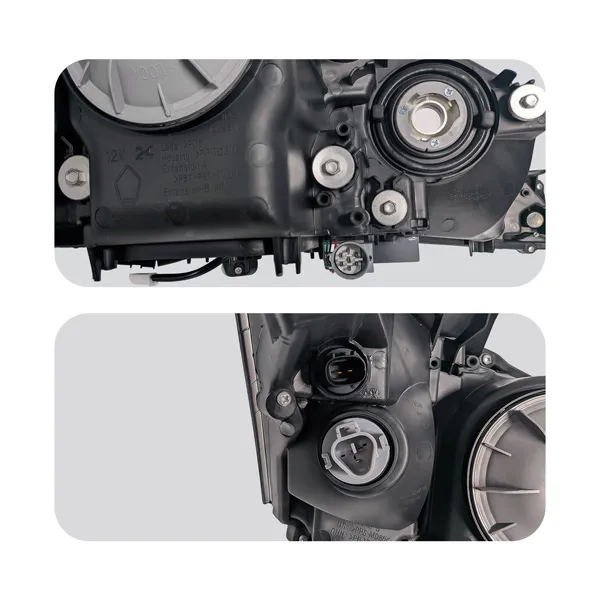
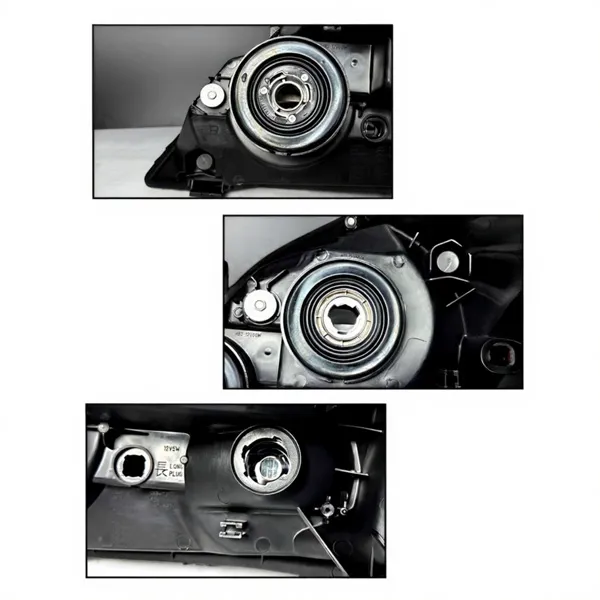
Bracket geometry variance — differences in tab count, tab position, screw spacing, and mounting angle — produces returns from customers who can physically position the fog light in the correct location but cannot secure it because the mounting points do not align with the bumper's mounting holes.
Why Car Lamp Compatibility Data Is Now a Profit Lever
In 2026, marketplace algorithms on major eCommerce platforms penalize SKUs with high return rates by reducing their search visibility — which means that a fog light SKU with a 15% return rate from wrong-fit orders is not just losing margin on the returns themselves, it is also losing future sales from reduced visibility. The cost of a single wrong-fit return — return shipping, restocking labor, potential damage inspection, and the marketplace fee that is not refunded — is typically three to five times the gross margin on the original sale. Vehicle-specific auto parts data quality is not a back-office detail; it is a direct determinant of SKU profitability.
How Fog Light Fitment Should Be Verified: The OEM Specification Method
The OEM specification method for fog light fitment verification replaces trial-and-error with a structured data-matching process that can be executed before the order is placed — eliminating the return before it occurs rather than managing it after.
Application Mapping: Make, Model, Year, Trim, and Market
The foundation of OEM-spec fitment verification is a complete application mapping that specifies the exact vehicle configuration the fog light is designed for. A complete application mapping includes the vehicle make, model, model year range, trim level, and market — because the same model name can have different fog light specifications in the US, European, and Japanese markets due to different lighting regulations and different equipment levels by trim.
Lexns' fog lamp catalog demonstrates this approach in practice. The product listings specify exact model year ranges — for example, 2003 to 2008 Lexus RX330, 2021 to 2025 Lexus LX600 — rather than listing the model name alone. This year-range specificity is the minimum data granularity required to prevent year-variant mismatch returns. For models with mid-cycle facelifts that changed the fog light mounting geometry, the year range must be split at the facelift year to prevent cross-variant orders.
OEM Reference Cross-Check
The most reliable verification step is cross-checking the aftermarket part number against the OEM part number for the specific vehicle application. OEM part numbers are unique to each vehicle configuration and are publicly available through dealer parts catalogs and parts interchange databases. An aftermarket fog light that is correctly mapped to the OEM part number for a specific application will fit that application — because the OEM part number is the definition of the correct fitment for that vehicle.
For distributors building a fog light catalog, requesting OEM part number cross-references from the supplier for each SKU is the single most effective step for reducing wrong-fit returns. A supplier who cannot provide OEM part number cross-references for their fog light products is a supplier whose fitment data cannot be independently verified — which is a significant sourcing risk for a distributor whose return rate depends on that data.
Interface Verification: Mounting Tabs, Connector Keying, and Bulb Type
Beyond the application mapping and OEM part number cross-check, three physical interface parameters must be verified before the order is placed. Mounting tab geometry verification requires either a dimensional drawing from the supplier showing the tab positions and screw spacing, or a physical sample that can be test-fitted to the vehicle or to a known-good OEM unit. Connector keying verification requires a photograph or drawing of the connector from the supplier, compared against the vehicle's wiring harness connector. For LED fog lights with CANbus error-free requirements, the connector verification must also confirm that the LED driver's load characteristics are compatible with the vehicle's body control module. Bulb type verification confirms that the fog light housing is designed for the correct bulb base type — H11, H8, H16, or LED — and that the bulb is included in the kit or clearly specified as a separate purchase.
Packaging and Labeling: The Last Line of Defense Against Pick Errors
Even correctly specified direct fit fog lights generate wrong-fit returns if the warehouse pick process selects the wrong SKU. Carton labeling that includes the vehicle application, the side (LH or RH), the OEM part number cross-reference, and a scannable barcode tied to the SKU in the warehouse management system reduces pick errors to near zero — because the picker can verify the application at the point of pick rather than relying on memory or visual similarity.
Key Specifications for Lexus Fog Lights: The Distributor RFQ Checklist
The following checklist covers the parameters that must be locked before placing a fog light order to prevent wrong-fit returns. It is structured for use as a supplier RFQ template that the sales team can copy directly into procurement communications.
Fitment and Application Data
| Parameter | What to Specify | Why It Matters |
|---|
| Vehicle application | Make, model, year range, trim, market (US/EU/JP) | Prevents year-variant and market-variant mismatch |
| Side | LH or RH, or pair | Prevents left-right confusion returns |
| OEM part number | OEM part number and supersessions | Enables independent fitment verification |
| Bumper variant | Pre-facelift or post-facelift if applicable | Prevents facelift-variant mismatch |
Product Configuration
| Parameter | What to Specify | Why It Matters |
|---|
| Lamp type | Housing only, or complete kit with bezel and bracket | Prevents missing-component returns |
| Bulb or LED system | Bulb base type, wattage, or LED driver specification | Prevents bulb-type mismatch and CANbus errors |
| Connector type | Connector family, pin count, pigtail length | Prevents wiring mismatch returns |
| Optical specification | Beam cutoff type, lens type (clear or yellow), beam pattern | Ensures regulatory compliance and customer expectation match |
Quality and Durability
| Parameter | What to Specify | Why It Matters |
|---|
| Water ingress resistance | IP rating or equivalent test standard | Prevents moisture-related failures in service |
| Vibration durability | Test standard and acceptance criteria | Prevents premature failure from road vibration |
| Lens coating | UV resistance specification and test duration | Prevents lens yellowing and hazing in service |
| Warranty period | Months or years and coverage scope | Sets customer expectation and return policy boundary |
Packaging and Labeling
| Parameter | What to Specify | Why It Matters |
|---|
| Carton label content | Application, side, OEM cross-reference, SKU barcode | Prevents warehouse pick errors |
| Inner packaging | Individual box per unit with foam protection | Prevents transit damage returns |
| Master carton marking | SKU, quantity, application summary | Supports receiving and putaway accuracy |
Lexns' fog lamp range covers Lexus application families including RX, LS, LX, ES, IS, GX, and GS variants across multiple model years, with product listings that specify the exact year range for each application — the data structure that supports this RFQ checklist approach and positions the supplier as a vehicle-specific auto parts specialist rather than a generic catalog supplier.
OEM Fitment Verification Workflow for Fog Light Distributors
Step one: collect vehicle information. Obtain the exact year, make, model, trim level, and market from the customer — or request the VIN, which encodes all of this information in a single string. Photograph the existing fog light mounting location, the connector, and the bumper mounting tabs if the customer is replacing an existing unit.
Step two: match to OEM part number. Use the vehicle information to identify the OEM part number for the fog light application. Cross-reference the OEM part number against the supplier's catalog to confirm that the aftermarket SKU is mapped to the correct OEM number. Confirm that the OEM part number has not been superseded by a revised part number that changes the mounting geometry or connector type.
Step three: verify the physical interface. Confirm the mounting tab geometry against the supplier's dimensional drawing or sample. Confirm the connector keying against the vehicle's wiring harness connector photograph. Confirm the bulb type and whether the kit includes the bulb or requires a separate purchase.
Step four: confirm the side and bumper variant. Verify that the order specifies LH or RH correctly, and confirm whether the vehicle has a pre-facelift or post-facelift bumper if the model year falls within a facelift transition period.
Step five: approve the label format and carton marking. Confirm that the carton label includes the vehicle application, the side, the OEM cross-reference, and a scannable barcode before the order is placed. For marketplace channels, confirm that the SKU in the warehouse management system matches the listing's fitment data exactly.
Step six: run a pilot order and track return reasons. For new SKUs, place a small pilot order and track return reasons by code — wrong side, wrong year, connector mismatch, bracket mismatch, or other. Use the return reason data to identify any fitment data gaps before scaling the order volume.
Applications and Channel Strategy: Where Direct Fit Fog Lights Cut Cost Fastest
Marketplace and eCommerce Channels
Marketplace channels — including major automotive parts platforms and general eCommerce marketplaces — have the highest return rate exposure for fog lights because the customer is selecting the product without the assistance of a knowledgeable counter staff member. The customer relies entirely on the product listing's fitment data to determine whether the product is correct for their vehicle. A listing with incomplete or incorrect fitment data will generate wrong-fit returns at a rate that reflects the gap between the listing data and the actual vehicle population ordering the product.
For marketplace sellers, the investment in complete fitment data — year-range specificity, OEM part number cross-references, left-right designation, and connector type — is the investment that determines the return rate. Lexns' vehicle-specific catalog structure, with exact year ranges for each Lexus application, provides the data foundation that marketplace listings require to minimize wrong-fit orders.
Wholesale Supply to Workshops and Service Centers
Workshop and service center customers have lower return rates than marketplace customers because the technician installing the fog light can identify a fitment mismatch before the installation is attempted — but a mismatch still generates a return, a reorder, and a delay in the repair that damages the workshop's relationship with its customer. Direct fit fog lights that install without bracket modification or wiring adaptation reduce the bay time per installation and eliminate the installation disputes that arise when a fog light requires modification to fit.
For wholesale distributors supplying workshops, the value proposition of OEM replacement fog lights is not just lower return rates — it is faster installation, fewer callbacks, and a supplier relationship that the workshop can rely on without verifying every order against the vehicle before accepting it.
Regional Distributors and Multi-Brand Catalogs
Regional distributors who supply both mainstream and premium vehicle segments benefit from a fog light catalog that covers both segments with the same level of fitment data quality. A distributor who can provide accurate fitment data for Toyota Corolla, Ford F-150, and Honda CR-V fog lights alongside Lexus RX and LS fog lights demonstrates the vehicle-specific auto parts expertise that differentiates a professional distributor from a commodity supplier.
The Lexus application families covered by Lexns — RX, LS, LX, ES, IS, GX, and GS — represent the premium segment of the Toyota group's vehicle lineup, and distributors who can supply these applications with OEM-spec fitment data are positioned to serve the premium aftermarket segment that generates higher per-unit margins and lower price sensitivity than the mainstream segment.
Selection Workflow, Maintenance, and TCO: Turning Fog Lights Into a Low-Return SKU
TCO Framework for Fog Light Distributors
| Cost Item | Without OEM-Spec Fitment Data | With OEM-Spec Fitment Data |
|---|
| Wrong-fit return rate | Higher — incomplete data generates mismatch orders | Lower — 1:1 application mapping prevents most wrong-fit orders |
| Return processing cost | Higher — return shipping, inspection, restocking labor | Lower — fewer returns reduce processing labor and freight cost |
| Marketplace rating impact | Higher — wrong-fit returns generate negative ratings | Lower — correct fitment generates positive installation reviews |
| Warehouse pick error rate | Higher — similar-looking SKUs without clear labeling | Lower — application-specific labeling enables verification at pick |
| Supplier dispute rate | Higher — connector and bracket mismatches generate disputes | Lower — verified interface data prevents mismatch disputes |
| Reorder rate from workshops | Lower — installation problems reduce repeat orders | Higher — reliable fitment builds workshop loyalty |
For a distributor processing 500 fog light orders per month with a 10% wrong-fit return rate and a return processing cost of $25 per return, the monthly return processing cost is $1,250. Reducing the return rate to 1% through OEM-spec fitment data and correct labeling saves $1,125 per month — $13,500 per year — before accounting for the marketplace rating improvement and the workshop reorder rate increase that correct fitment generates.
Conclusion
For fog light distributors in 2026, perfect fitment is not a quality aspiration — it is a margin protection strategy. Wrong-fit returns are the most expensive failure mode in automotive aftermarket distribution, and they are almost entirely preventable through OEM-spec application mapping, physical interface verification, and application-specific warehouse labeling. By sourcing OEM replacement fog lights with 1:1 application mapping — especially for Lexus fog lights across the RX, LS, LX, ES, IS, GX, and GS model families — distributors reduce wrong-model orders, protect marketplace ratings, and build the supplier reliability that generates repeat orders from workshops and regional distributors.
Lexns' fog lamp catalog provides the vehicle-specific fitment data structure — exact year ranges, model-specific configurations, and Lexus application family coverage — that supports this approach. The investment in correct fitment data at the sourcing stage is the investment that determines the return rate, the marketplace rating, and the long-term profitability of the fog light product line.
Get Your Recommended Fitment List and Quote
Visit the fog lamp product page to review the full application range, then submit the following details to receive a matched product recommendation and quotation:
| Parameter | What to Provide |
|---|
| Work condition and channel | eCommerce, workshop supply, or retail chain; target countries and regulatory requirements |
| Quantity | Trial order quantity and monthly forecast; current return rate baseline if available |
| Fitment data | Vehicle make, model, year range, trim (or VIN), OEM part number, LH or RH, bumper version, connector photographs |
| Target metrics | Direct-fit requirement, water ingress rating goal, warranty period target, acceptable return rate |
| Current problem | Wrong-fit returns, label or picking errors, connector mismatch, inconsistent supplier fitment data, high dispute rate |
FAQ
1. What are fog lights?
Fog lights are auxiliary front lamps designed to improve near-field road illumination in fog, rain, or snow conditions. They use a wide, low beam pattern that illuminates the road surface close to the vehicle without creating the glare that high beams produce in fog — because the beam is aimed below the fog layer rather than into it. In the automotive aftermarket, fog lights are one of the most frequently replaced exterior lighting components, and they are also one of the highest-return categories because the fitment requirements — mounting geometry, connector type, beam pattern, and left-right orientation — vary significantly between vehicle models, model years, and markets.
2. How do OEM replacement fog lights compare to universal fog lights for distributors?
OEM replacement fog lights — also called direct fit fog lights — are designed to match the mounting geometry, connector type, beam pattern, and optical characteristics of the original equipment fog light for a specific vehicle application. They install without bracket modification or wiring adaptation, and they produce the same beam pattern and appearance as the original equipment. Universal fog lights are designed to fit a range of vehicles through adjustable mounting brackets and generic connectors, which reduces the SKU count required to cover a broad vehicle range but increases the installation variation and the dispute rate — because the customer must adapt the mounting and wiring to fit their specific vehicle. For distributors, OEM replacement fog lights produce lower return rates and fewer installation disputes than universal fog lights, which typically results in lower total cost of ownership even when the unit price of the OEM replacement is higher.
3. How does OEM-spec fitment reduce costs and improve ROI for distributors?
OEM-spec fitment reduces costs through four mechanisms. Lower wrong-fit return rates reduce the return processing cost — return shipping, inspection, restocking labor, and the marketplace fee that is not refunded on a returned order. Fewer installation disputes reduce the customer service labor cost and the goodwill credits that disputes generate. Higher marketplace ratings from correct fitment improve search visibility and conversion rates, increasing revenue without increasing advertising spend. And higher workshop reorder rates from reliable fitment build the repeat business that reduces customer acquisition cost over time. Together, these improvements typically produce a return on the investment in fitment data quality within the first year of implementation.
4. Do customers need to modify their vehicle to install direct fit fog lights?
Direct fit fog lights are designed to install without bracket cutting, wiring modification, or bumper drilling — the mounting tabs align with the vehicle's existing mounting points, and the connector plugs directly into the vehicle's wiring harness. However, distributors should confirm three things before representing a fog light as direct fit for a specific vehicle: that the bumper variant matches — pre-facelift or post-facelift — because facelift bumpers may have different mounting point locations; that the connector type matches the vehicle's wiring harness connector, including the pin count and keying pattern; and that the vehicle's wiring harness includes a fog light circuit — some base trim levels do not include fog light wiring, and these vehicles require an additional harness and switch kit for fog light activation regardless of whether the fog light housing is direct fit.
5. What parameters should I provide to a supplier to avoid wrong-fit shipments?
Provide the vehicle make, model, exact year range, trim level, and target market — US, European, or Japanese specification — for each SKU. Provide the OEM part number for the application if available, as this is the most reliable single identifier for the correct fitment. Specify the side — left-hand, right-hand, or pair — for each order line. Provide photographs of the existing fog light mounting location, the connector, and the bumper mounting tabs if the vehicle is a facelift variant or if there is any uncertainty about the bumper version. Specify the bulb type or LED system requirement, including any CANbus error-free requirements for vehicles with body control module monitoring. And specify the packaging and labeling requirements — including the application, side, OEM cross-reference, and SKU barcode on the carton label — to prevent warehouse pick errors at the distributor's facility.
 English